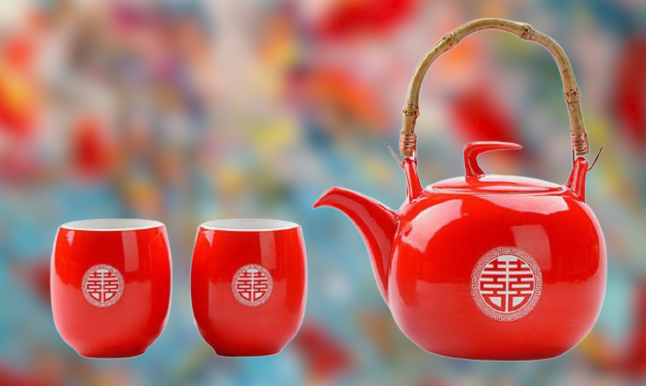
Some friends who are attending their first Chinese wedding have been curious about what it all entails. Below are some of the questions asked. Some interesting reads are also linked in the below. It should be noted that traditions and customs do vary depending on the Chinese community/group the bride and groom belongs to; and some aspects have been simplified or modernised.
Why is there so much red? Traditionally, red is considered an auspicious colour. It’s considered the colour of joy and happiness. It is also why one would see a lot of red, orange, pink, and gold during Chinese New Year. Click HERE to learn about traditional Chinese wedding colours and symbols.
What should I wear? Guests customarily avoid wearing white as the bride will be wearing her special white dress. In Chinese weddings, the bride wears her red wedding Qun Kwa; so it’s customary to also avoid wearing red (at least bright red). Black, particularly all-black for the ladies is also generally avoided if possible due to its sombre tone. If one owns a Chinese Cheongsam, this is an occasion to wear and enjoy it!
Why is there no gift registry? Chinese people are incredibly practical people. In lieu of a gift registry, a Laisee box will be made available at the reception table. While local Hong Kongers have a general idea of the going rates; there is no fixed amount. It depends on how close one is to the bride or groom, and the venue and menu of the wedding banquet. Click HERE to learn more about Laisees and traditional blessings to write on a Laisee envelop.
What’s this hair combing business? Prior to the wedding day, a lady from a fruitful union passes on her good fortunes by combing the bride’s hair. With each stroke, a blessing is offered. There is the long version and the short version, and a number of other rituals such as sitting in front of opened window facing the moon, light a candle etc. Click HERE and HERE to read more about it.
Wedding dress do’s and don’ts: It is customary in western culture for the groom to avoid seeing his bride in her white dress before the wedding. In Chinese culture; the bride should not wear her red bridal dress before the wedding. Even for dress fittings, she should try on the skirt and top separately. This symbolic act demonstrates the wearing of wedding attire just once in her life as this will be a lifelong union. Well, for this bride, the white dress will be worn for pre-wedding photos. And that red Chinese dress? As neither sets of parents will be in attendance at this particular time, it will likely be worn again at a later date when travel restrictions are lifted. One bends the rule when needs be!
What’s a Chinese Tea Ceremony? To show respect, the bride and groom will kneel before parents, elders, and/or other esteemed individuals and offer cups of tea with both hands. Blessings and words of wisdom along with Laisee, and gold such as Phoenix and dragon bangles, golden pig necklaces (yes, it really is a pig complete with dangling piglets) are gifted. Click HERE to learn more about this ritual.
What’s for dinner? Traditionally, a banquet of 8 – 12 dishes will be served. Each dish is carefully selected to represent good blessings. We’ll be serving 12 so come hungry! Click HERE to learn more about banquet dishes and symbolism. Click HERE to learn about other special food items (Coconuts? Pig? Nuts?….Why?).
The Cake: A lovely towering cake upon an equally lovely decorated table will be rolled out onto the stage. Wahhh…5, 6, 7 tiers of cake with fresh frothy cream! But wait! Don’t get too excited as it’s really just a show piece; there’s even a helpful slot for the knife to go in. A symbolic cake cutting gesture will be made and a photo will be snapped to record the grand moment. While some cake might be served during the cocktail hours, or is a part of a sweets table; cake (western wedding cake) isn’t really a Chinese tradition. But don’t fret! There will be cake! Look inside your wedding invitation; cake cards have been included as a token of appreciation. Some couples give table gifts instead, some do both; there isn’t one standard way especially when the couple tries to do an east meets west wedding. Click HERE to read more about traditional Chinese wedding cakes.
Do you really crash down the door? No! These ‘door games’ are part of the bride fetching ritual. At an auspicious time on the wedding day, the groom and his groomsmen (Hing-Dai) will come knocking to fetch the bride. To test the sincerity of the groom, the bridesmaids or ‘sisters’ (Tze-Mui) will set out a series of ‘games’ as well as bargain for some extra cash. This particular bride has witnessed games such as the groom and his entourage donning tutus and singing songs to a poor neighbour or two (don’t worry, it was pre-arranged); fishing mahjong tiles out of bowls of icy water with toes; running up to strangers to ask for a shiny dollar; performing a dance routine in a public square etc. For this lucky groom, as everyone’s at work during the day, he gets to escape this part of the wedding fun!
Is there a dowry? It’s complicated. If parents and esteemed elders are involved, it can get even more complicated. Click HERE to learn more about it.
Some interesting reads:
A guide to Chinese weddings in Hong Kong for the clueless guest – what to do, what not to do, and how to make sense of what is happening (SCMP, 17MAR2020)
Chinese Wedding Traditions: 7 Customs Every Couple Should Be Aware Of (Bride and Breakfast HK, 16MAR2017)
8 things you need to know before going to a Chinese wedding (Business Insider, 25NOV2015)
My Big Fat Hong Kong Wedding: 7 Traditional Rituals You Need to Know (Localiitz, 11OCT2018)
 Our Special Day